EdgeDataTwin
Model physical assets and processes into actionable digital intelligence
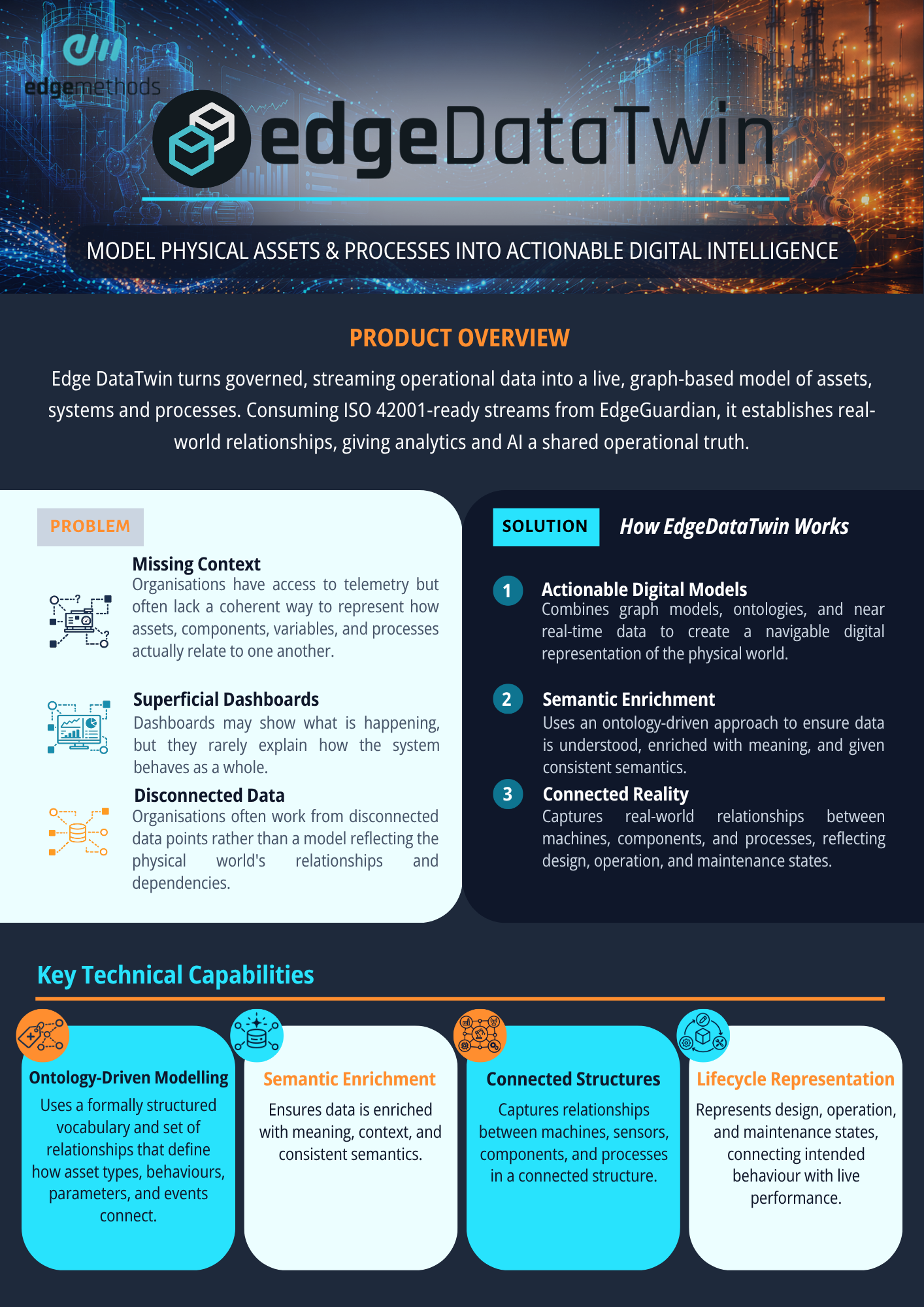
EdgeDataTwin creates semantic, graph-based representations of physical assets, systems, and processes — turning operational data into a structured digital model that can be monitored, explored, and acted on in real time.
It is a semantic modelling and digital twin product built to make complex environments easier to understand, simulate, and optimise.
Most organisations have access to telemetry and system data, but lack a coherent way to represent how assets, components, variables, and processes actually relate to each other. EdgeDataTwin solves this by combining graph models, ontologies, near real-time data, and lifecycle context to create a navigable digital representation of the physical world.
Ontologies play a central role in this capability. They provide a formally structured vocabulary and set of relationships that define how different asset types, behaviours, parameters, and events connect. By taking an ontology-driven approach, EdgeDataTwin ensures data is not only captured, but understood — enriched with meaning, context, and standardised semantics. This reduces inconsistency between systems, improves interoperability across data sources, and establishes a shared understanding of how the operational environment behaves.
The result is a more actionable foundation for analytics, visualisation, optimisation, and AI-driven decision support.
Core Capabilities
EdgeDataTwin transforms raw operational data into a meaningful, queryable model of the physical world.
It is designed to solve the practical problems that sit between disconnected data sources and real operational understanding:
-
data that describes assets but not the relationships between them
-
limited context around how machines, sensors, components, and processes interact
-
inconsistent representations of physical systems across tools and teams
-
difficulty modelling lifecycle, state, and behaviour in a reusable way
-
limited ability to simulate, optimise, or reason over complex environments
By resolving these issues, EdgeDataTwin provides the semantic and graph-based foundation needed to move from visibility to action.
- Graph-based modelling
EdgeDataTwin captures relationships between entities such as machines, sensors, components, and processes in a connected structure that reflects how the real environment works. - Ontology-driven semantics
Ontologies define the meaning of physical-world concepts in data terms, providing consistent language, structure, and interoperability across systems and use cases. - Near real-time synchronisation
Telemetry and operational signals keep the twin aligned with current conditions, enabling near-live visibility into state, performance, and change over time. - Lifecycle representation
EdgeDataTwin can represent design, operation, and maintenance states, helping organisations connect what was intended, what is happening, and what needs to happen next. - Simulation and optimisation readiness
By combining semantic models with real-time data, EdgeDataTwin creates a foundation for predictive maintenance, performance optimisation, scenario modelling, and autonomous decision support.
How it works
- Ingest → Model → Relate → Synchronise → Visualise → Act
Ingest – Data is collected from sensors, enterprise systems, operational platforms, and external sources to create a high-quality representation of the physical asset or process.
Model – A semantic data layer is created to represent the physical world in data terms, including entities, attributes, states, and behaviours.
Relate – Graph models and ontologies define how assets, components, sensors, and processes connect to one another.
Synchronise – Real-time telemetry keeps the model aligned with live conditions, enabling current-state monitoring and ongoing updates.
Visualise – The twin can be explored as a navigable, queryable digital representation of the physical environment.
Act – The model supports analytics, simulation, optimisation, and decision-making across operational and enterprise use cases.
Why it matters
Customers are not really asking whether they can build dashboards. They are asking:
- How do we create a single, trusted understanding of our assets, processes, and operations so we can act faster and make better decisions?
Which means asking:
- How do we make sense of all the data we already have?
- How do we create a consistent understanding of assets, processes, and operations across different systems and teams?
- How do we connect data from systems that do not speak the same language?
- How do we understand how assets, components, variables, events, and processes actually relate to each other?
- How do we get context, not just raw data?
- How do we simulate or predict what might happen next?
- How do we trust our data enough to automate decisions and enable AI safely?
EdgeDataTwin answers these questions by turning operational complexity into a semantic, graph-based model that can be explored, analysed, and acted on.
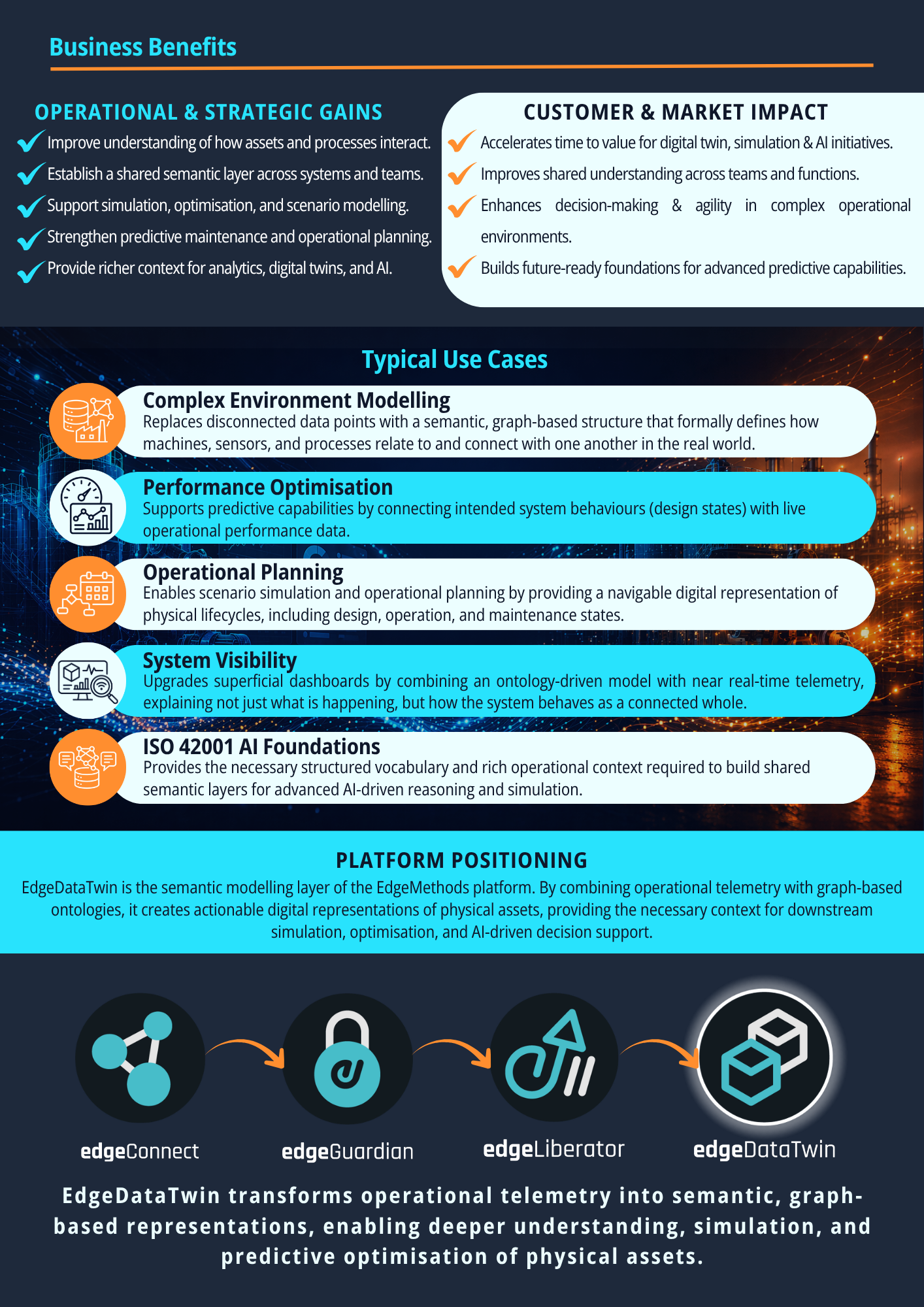
Business Benefits
Semantic, real-time models for better decisions and stronger operational control
EdgeDataTwin helps organisations:
-
improve understanding of how assets, components, and processes interact
-
create interoperable, reusable representations of complex environments
-
support predictive maintenance and performance optimisation
-
test scenarios virtually before making physical changes
-
strengthen analytics, visualisation, and AI with richer operational context
-
reduce risk by enabling simulation and proactive decision support
Summary
Turn data about the physical world into a model you can understand and act on
EdgeDataTwin creates graph-based, ontology-driven digital representations of physical assets and processes so data becomes actionable, navigable, and ready for business use cases
Learn More
Resource 1: EdgeDataTwin Datasheet